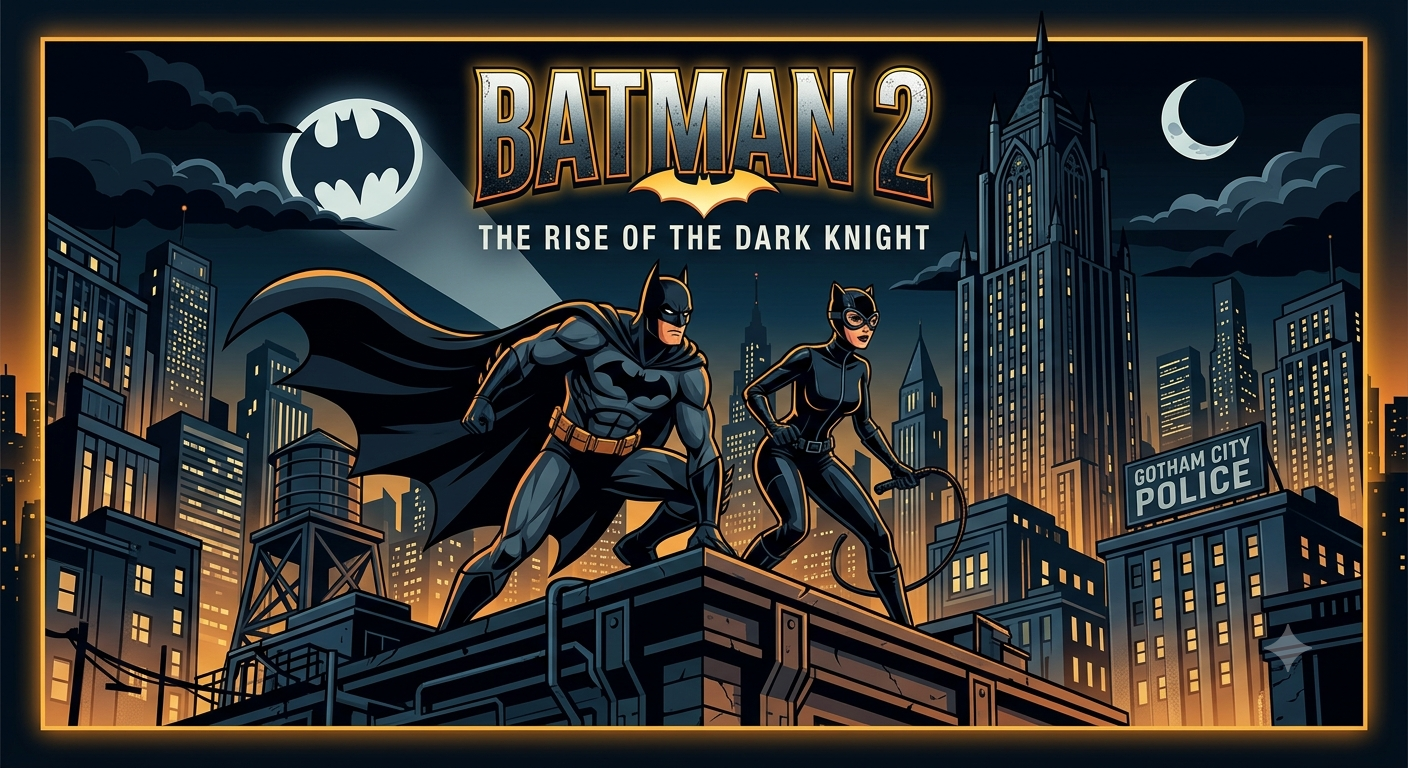
What if The Batman Part II traded some of its gothic atmosphere for a tightly constructed crime thriller, where every conversation hides a secret and every clue leads to a more dangerous discovery? Under Steven Soderbergh’s direction, Batman’s next adventure could become a story about system, unreliable people, and a detective who can no longer trust the city he is trying to save.
Matt Reeves’ The Batman (2022) established a rain-soaked Gotham shaped by organized crime, institutional damage, and the Riddler’s campaign of fear. Its sequel offers an opportunity to explore the consequences of that chaos. Soderbergh, known for crime films such as Traffic, Out of Sight, and No Sudden Move, would bring a different filmmaking perspective to the material.
This is a hypothetical look at how Soderbergh might approach the sequel, not a claim that he wrote a different Batman story. As of October 2026, reports say Soderbergh is helping complete portions of The Batman Part II’s principal photography while Reeves temporarily steps away for a personal family matter; Reeves remains attached to the film and is expected to oversee post-production. The following imagined plot explores what a Soderbergh-directed version could look like as a creative exercise.
A New Gotham Where Everyone Has Something to Hide
The story would begin several weeks after the catastrophic flooding that devastated Gotham in the first film. Emergency shelters are closing, reconstruction contracts are being awarded, andleaders are promising to rebuild the city. But the recovery effort has created another opportunity for system.
Bruce Wayne initially believes Gotham needs money, infrastructure, and public leadership more than another campaign of fear. He starts investigating reconstruction projects through the Wayne Foundation, hoping to identify where the money is disappearing.
Then a city official involved in the rebuilding effort is found dead.
The officials classify the despise as a conspiracy, but Batman discovers that the victim had been collecting recods of fraudulent contracts, shell companies, and payments to individuals connected to Gotham’s system. Someone is using the city’s recovery to establish a new network of power.
Rather than introducing a villain who announces a grand plan, the film would reveal the conspiracy through small details: a missing document, an altered invoice, a witness who suddenly changes their statement, and a security recording that contradicts an official timeline.
This approach would suit Soderbergh’s interest in crime stories driven by competing motives and shifting loyalties. In discussing his attraction to crime films, he has emphasized their inherent conflicts, high stakes, betrayal, and questions of trust.
The mystery would not simply ask who committed the conspiracy. It would ask who benefits from Gotham’s situations.
Batman Becomes a Detective Again
One of the strongest possibilities for a Soderbergh-style Batman film would be a greater emphasis on investigation over spectacle.
Batman would spend much of the story reconstructing events rather than fighting through rooms of anonymous henchmen. He would interview construction workers, examine financial records, follow intermediaries, and compare records gathered by different people. Every discovery would reveal another piece of the conspiracy, but each would also complicate his understanding of the case.
A individual might tell the truth about one event while lying about another. A official could provide a useful lead because it serves their own interests. Even Batman’s allies might possess information they are reluctant to share.
Jim Gordon would become essential to the investigation. His expert work could expose the limits of what Batman can achieve outside the law, while Batman’s discoveries would force Gordon to question whether the department can investigate itself.
The two would disagree over whether to release the records before the conspiracy is fully understood. Gordon would fear that premature accusations could destroy an investigation. Batman would worry that waiting would give the perpetrators time to eliminate records.
Their conflict would create tension without requiring either character to become an antagonist.
The result could be a detective story in which Batman’s critical thinking matters as much as his physical abilities. His greatest advantage would be his capacity to notice connections that everyone else has overlooked.
A Villain Who Controls Gotham From the Shadows
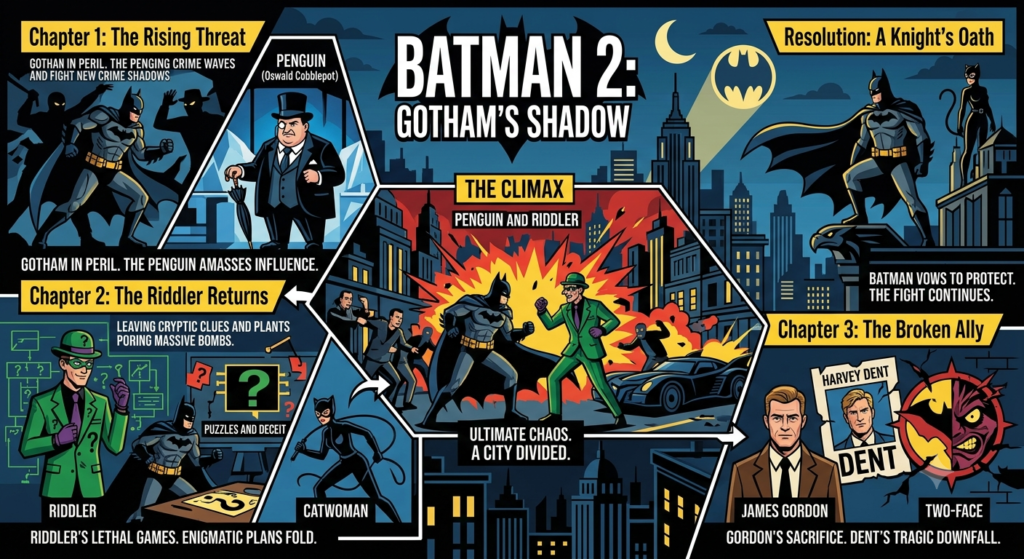
A Soderbergh-directed version would not necessarily need a more powerful supervillain. It could instead build its central threat around a network of people who appear respectable.
Imagine a public-facing redevelopment executive who promises to restore Gotham’s assets. Instead, they use intermediaries, private security firms, and organizations to keep the system functioning.
This antagonist would be dangerous because they understand that power does not always need to announce itself.
The Penguin could fit naturally into this environment. Having established himself as a significant individual figure in Gotham’s world, he could exploit the confusion surrounding reconstruction. He might finance legitimate businesses, broker agreements between rival factions, or sell information to Batman while protecting his own interests.
He would not need to become the story’s ultimate villain. His shifting loyalties could make him an unpredictable participant in a larger struggle.
This would give the film a different kind of suspense: Batman would never know whether a helpful source was genuinely assisting him or simply using him to eliminate a competitor.
The Riddler’s Legacy Becomes the Real Mystery
The Riddler’s actions in the first film showed the system that Gotham’s powerful citizens had spent years concealing. A Soderbergh-style sequel could explore what happens after a individual shows the truth but leaves the city without a clear path forward.
The Riddler would not necessarily need to return as the primary antagonist.
Batman would face an uncomfortable question: what happens when people stop believing?
Some Gotham residents might regard the Riddler as a monster.
Bruce Wayne would also have to confront his own shortcomings. In the first film, he began to understand that Batman’s mission could not be limited to punishing mischievous . Gotham needed hope, public accountability, and practical assistance.
In this imagined sequel, Bruce’s charitable efforts could become part of the investigation.
The central conflict would therefore operate on two levels. Batman would try to identify the people responsible for the conspiracy, while Bruce Wayne would attempt to prevent the city from becoming trapped in another cycle of anger and violence.
How Soderbergh Could Change the Film’s Visual Style
Soderbergh is not simply a director of crime stories. He is also a cinematographer and editor who has experimented with unconventional camera placement, naturalistic lighting, and economical storytelling. His approach to filmmaking often allows the editing and framing to carry information that conventional dialogue might otherwise explain.[4]
Applied to Batman, these techniques could produce a distinctive visual experience.
Instead of relying exclusively on dramatic rooftop shots and sweeping views of Gotham, the camera might follow an investigator through a office, remain on a individual during an uncomfortable interview, or observe a suspect from across a crowded restaurant.
The city would feel less like a theatrical backdrop and more like a functioning environment in which crimes happen while ordinary life continues around them.
Batman could appear in the margins of scenes before becoming the focus.
Action sequences could follow the same principle.
Rather than turning every confrontation into an extended spectacle, the film might emphasize speed, confusion, and physical consequences. A fight in a cramped corridor could be over before the audience has time to process every movement. Batman would still be formidable, but his victories would feel difficult rather than effortless.
The editing could also move between different characters investigating the same conspiracy.
That structure would create suspense through information: viewers would know enough to suspect danger but not enough to understand the complete picture.
Bruce Wayne’s Personal Investigation Could Become the Emotional Core
The most interesting part of this imagined story would be the tension between Bruce Wayne and Batman.
Bruce would begin by believing that his wealth gives him the means to repair Gotham. Batman, meanwhile, would assume that uncovering the conspiracy and bringing its perpetrators to justice will solve the immediate problem.
Both approaches would prove insufficient.
The people behind the reconstruction scheme would show Bruce’s public identity. They could accuse the Wayne Foundation of profiting from contracts, manipulate financial records, or use Bruce’s attempts to investigation.
This would connect his personal journey to the detective plot without requiring another lengthy origin story. The audience already knows why Bruce became Batman. The more compelling question is whether he can become the kind of person Gotham needs.
Alfred could challenge Bruce’s tendency to treat every problem as something he must solve alone. Gordon could remind him that it matters more than suspicion.
The story would gradually force Bruce to recognize that protecting Gotham means more than identifying the people responsible for its problems. It also means building something that can survive after Batman leaves the scene.
The Ending: Batman Wins the Case but Not the City
A conventional superhero climax might end with Batman defeating the mastermind in a spectacular confrontation. A Soderbergh-inspired ending could deliver a more complicated victory.
Batman finally connects the reconstruction contracts, financial transfers, meeting official, and intermediaries. He identifies the central figure behind the conspiracy and obtains checks that can show the entire operation.
But the final discovery creates a dilemma.
Releasing everything immediately could show innocent people whose identities were were forged. It could also collapse essential reconstruction projects, leaving vulnerable neighborhoods without housing or services.
Batman must decide how to deal without allowing its perpetrators to dictate the consequences.
He works with Gordon to secure the checks, protect records, and build it. The mastermind is now seen.
The ending would offer no simple declaration that Gotham has been saved.
Instead, Bruce would establish a more transparent reconstruction initiative through the Wayne Foundation, recognizing that philanthropy cannot replace accountable public institutions. Batman would continue investigating the remaining connections.
In the final scene, he receives a message from an unknown source containing a document connected to another unresolved scene. The information suggests that someone inside Gotham’s institutions has been seeing Batman’s checks from the beginning.
The sequel would end with a new mystery rather than a larger explosion.
That conclusion would leave room for another film while reinforcing the central idea: Gotham’s greatest threat is not necessarily a single mischief, but a machine that continually produces new ones.
Would a Soderbergh-Directed Batman 2 Work?
A Soderbergh version of The Batman Part II could work particularly well as a grounded detective thriller. His experience with crime narratives, overlapping storylines, and morally complicated characters offers a compelling framework for exploring Gotham beyond its familiar superhero conflicts.
The key would be preserving what made Reeves’ film distinctive. Gotham needs its oppressive atmosphere, Bruce Wayne needs his emotional vulnerability, and Batman needs a mystery worthy of his investigative abilities.
Soderbergh’s hypothetical contribution would not have to mean abandoning those elements. It could mean presenting them through tighter plotting, more perspectives, and a greater emphasis on the mechanisms.
The result would be a Batman story in which financial records matter as much as forensic checks, conversations can be more dangerous than fights, and the villain’s greatest weapon is the ability to make everyone else complicit.
Ultimately, the most interesting version of The Batman Part II under Soderbergh would not be about making Batman darker or more violent. It would be about making Gotham’s mysteries more intricate and its problems more difficult to solve.
References
Entertainment Weekly — Steven Soderbergh steps in to help complete The Batman Part II
Los Angeles Times — The Batman Part II release date, cast, and known story details”
Directors Guild of America — Interview with Steven Soderbergh on cinematography and editing”
Other reads:
A youtube video:

Linkedin -- www.linkedin.com/in/shishir-bhargava-68a8b4257
- What Would The Batman 2 Story Look Like If Steven Soderbergh Directed It? - October 16, 2026
- How to Organize Digital Receipts and Warranties | A Practical System That Works - October 11, 2026
- How to Live Without AI | 30-Day Experiment Taught Me to Think Again - October 8, 2026
⚠️ Most People Discover Trends When It's Too Late
Join the Trends Goldmine Insider List and get emerging AI tools, future products, viral keywords, and hidden opportunities before they hit the mainstream.
While everyone else is chasing yesterday's trends, you'll be spotting tomorrow's opportunities first.
🚀 Free Weekly Trend Alerts • No Spam • Unsubscribe Anytime
SIGN UP NOW & RECEIVE A SHORT REPORT ON HOW TO MAKE FORTUNE WITH TRENDS.Trusted by readers who want to discover opportunities before the crowd.