Why Global Markets Are Suddenly Nervous Again Today
The Warning Sign Most People Ignore
Something strange happens every time global markets become nervous.
The headlines usually arrive after the fear has already started.
A stock index drops.
Currencies suddenly move.
Gold prices jump.
Investors begin selling risky assets.
Financial news channels start asking the same questions:
“Is something bigger coming?”
“Are markets overvalued?”
“Should investors be worried?”
“Is this the beginning of another crisis?”
For most people watching from the outside, market movements seem random.
One day everything looks optimistic.
Companies announce strong earnings.
Technology stocks reach new highs.
Economic reports appear healthy.
Consumer spending remains strong.
Then suddenly…
Confidence changes.
The same investors who were willing to pay premium prices for future growth begin searching for safety.
Money moves.
Strategies change.
Fear spreads.
But the biggest misunderstanding is this:
Markets rarely become nervous because of one single event.
They become nervous when millions of investors collectively realize that the future may be less predictable than they believed yesterday.
That moment—the shift from confidence to uncertainty—is where market volatility begins.
The Invisible Anxiety Behind Global Markets
A market is not simply a collection of numbers moving on a screen.
Behind every price is a human decision.
A pension fund deciding where billions of dollars should be invested.
A hedge fund manager protecting client capital.
A small investor wondering whether to buy or sell.
A company deciding whether to expand.
A government deciding economic policy.
Markets are essentially a giant prediction machine.
They are constantly trying to answer one question:
“What will the world look like six months, one year, or five years from now?”
When the answer becomes unclear, investors become cautious.
This is why markets can decline even when the current economy appears healthy.
The market is not only reacting to today’s reality.
It is pricing tomorrow’s uncertainty.
The Dangerous Gap Between Reality and Expectations
One of the most important concepts in investing is something many people overlook:
Markets do not move based only on whether things are good or bad.
They move based on whether reality is better or worse than expectations.
Imagine a company announces record profits.
That sounds positive.
But what if investors expected even bigger profits?
The stock may fall.
Why?
Because expectations were already priced in.
The same psychology applies to entire economies.
A country may have:
- Strong employment
- Growing businesses
- Rising wages
Yet markets can still become nervous if investors believe future growth will slow.
The fear is not always about what is happening today.
It is about what might happen next.
The First Hidden Force: Interest Rates
Behind many market movements is one powerful factor:
The cost of money.
Interest rates influence almost everything.
When central banks raise rates:
- Borrowing becomes expensive.
- Companies pay more to finance expansion.
- Consumers spend more cautiously.
- Future profits become less valuable.
- Investors often move toward safer assets.
For years after the global financial crisis, many economies operated in an environment of historically low interest rates.
Cheap money supported:
- Technology companies
- Housing markets
- Startups
- Stock valuations
- Business expansion
But when inflation increased, central banks changed direction.
Higher rates became necessary to slow price increases.
This created a difficult adjustment.
Investors had to rethink the value of companies, especially businesses whose profits were expected far in the future.
Why Bond Markets Often Know Before Stock Markets
Most ordinary investors watch stock markets.
Professional investors often watch something else first:
The bond market.
The bond market is often considered a signal of investor expectations about:
- Inflation
- Economic growth
- Interest rates
- Government debt
When bond investors become concerned, it can influence the entire financial system.
A rise in government bond yields can affect:
- Mortgage rates
- Corporate borrowing
- Currency values
- Stock valuations
Many major market shifts have involved changes in bond market expectations before they became obvious elsewhere.
The Second Hidden Force: Inflation Fear
Inflation is not just about higher prices at the supermarket.
For financial markets, inflation represents uncertainty.
Investors ask:
- Will central banks keep rates higher for longer?
- Will companies maintain profit margins?
- Will consumers reduce spending?
- Will economic growth slow?
A small increase in inflation may not create panic.
But unpredictable inflation creates fear because it makes planning harder.
Businesses struggle to forecast costs.
Consumers struggle to plan spending.
Investors struggle to value future returns.
Markets dislike uncertainty.
The Third Hidden Force: Geopolitical Risk
The modern economy is deeply interconnected.
A conflict thousands of kilometers away can affect:
- Energy prices
- Shipping routes
- Commodity supplies
- Manufacturing costs
- Investor confidence
Recent years have demonstrated how quickly geopolitical events can reshape markets.
Energy disruptions can influence inflation.
Trade restrictions can affect supply chains.
Political tensions can change investment decisions.
The global economy has become so connected that markets constantly monitor events far beyond traditional financial centers.
The AI Boom and the New Question Investors Are Asking
One of the biggest stories influencing global markets has been artificial intelligence.
AI has created enormous excitement.
Companies involved in:
- Semiconductor manufacturing
- Cloud computing
- Data centers
- AI software
have attracted significant investor attention.
The optimism is based on a powerful idea:
AI could transform productivity across industries.
But markets are beginning to ask more difficult questions:
- Are valuations too high?
- How quickly will AI generate profits?
- Which companies will actually benefit?
- Are investments moving faster than real demand?
The debate is not whether AI matters.
The debate is whether expectations have moved too far ahead of reality.
The Emotional Cycle Behind Every Market Shift
Markets often follow a repeating emotional pattern.
Stage 1: Optimism
Investors see opportunity.
Prices rise.
Confidence increases.
Stage 2: Excitement
Everyone wants to participate.
Risk appears smaller.
Stage 3: Overconfidence
People assume the trend will continue forever.
Stage 4: Uncertainty
Small problems receive more attention.
Questions increase.
Stage 5: Fear
Investors focus on protecting capital.
Stage 6: Opportunity
Long-term investors begin looking for value.
Understanding this cycle changes how people view market movements.
A nervous market is not always a sign of disaster.
Sometimes it is a sign that expectations are being recalculated.
The Hidden Lesson
The biggest mistake many investors make is believing markets are only about numbers.
They are also about psychology.
A market can rise because people believe the future will be better.
A market can fall because people become uncertain about that future.
The numbers matter.
But the emotions behind those numbers often determine the speed and intensity of market movements.
The Reader’s Turning Point
Most people experience market volatility as something happening to them.
They open their phone.
They see red numbers.
They feel uncertainty.
They react emotionally.
But informed investors develop a different perspective.
They learn to ask:
- What changed?
- Is this temporary or structural?
- What are markets actually pricing?
- Which signals matter?
- Which headlines are simply creating noise?
The goal is not predicting every market movement.
Nobody can do that consistently.
The goal is understanding the forces underneath the movement.
The Market Fear Nobody Sees Until It Is Too Late
When people hear that markets are nervous, they often imagine a dramatic event:
A major bank failure.
A sudden war.
A corporate collapse.
A financial scandal.
Sometimes that is true.
But many market shifts begin much earlier, quietly developing beneath the surface.
A currency weakens.
Bond yields rise.
Commodity prices move.
Investors quietly reduce risk.
Large institutions adjust their portfolios.
By the time ordinary investors notice the headlines, the financial system may already have been responding for weeks.
This is the hidden world of global markets.
A complex network where money constantly moves between:
- Stocks
- Bonds
- Currencies
- Commodities
- Real estate
- Digital assets
- Emerging markets
A change in one corner can create waves everywhere else.
The Currency Signal: Why the Dollar Matters So Much
One of the most important forces in global finance is currency movement.
Especially the strength of the United States dollar.
The dollar is not simply America’s currency.
It is the world’s primary reserve currency and plays a central role in international trade and finance.
Many commodities are priced in dollars.
Many countries borrow money in dollars.
Many global companies earn revenue in multiple currencies.
When the dollar becomes stronger, the impact spreads worldwide.
Why a Strong Dollar Can Create Global Stress
Imagine a company or country that borrowed billions of dollars.
The debt amount was manageable when their local currency was strong.
But if their currency weakens against the dollar, repayment becomes more expensive.
This creates pressure on:
- Governments
- Businesses
- Banks
- Emerging economies
A stronger dollar can tighten global financial conditions even if the U.S. economy itself appears stable.
This is why investors around the world monitor currency markets closely.
The Gold Signal: When Fear Looks for Safety
For thousands of years, gold has represented security.
Modern financial systems have changed dramatically, but gold still plays a psychological role.
When investors become uncertain, they often look toward assets perceived as stores of value.
Gold demand can rise because investors worry about:
- Inflation
- Currency weakness
- Geopolitical instability
- Financial uncertainty
However, gold prices are influenced by many factors, including interest rates and currency movements.
A rising gold price does not always mean disaster is coming.
Sometimes it simply reflects investors seeking protection during uncertain periods.
Oil: The Commodity That Can Change Everything
Few markets influence the global economy like energy.
Oil affects:
- Transportation costs
- Manufacturing
- Food prices
- Inflation
- Consumer spending
A sudden increase in energy prices can create a difficult situation:
Higher prices can hurt consumers.
Businesses may face increased costs.
Central banks may face pressure to keep monetary policy tighter.
This creates a challenge:
How do policymakers slow inflation without damaging economic growth?
The Central Bank Puzzle
Central banks are among the most powerful institutions in modern economies.
They influence markets through:
- Interest rate decisions
- Economic forecasts
- Policy statements
- Liquidity management
A single sentence from a central bank official can move billions of dollars.
Why?
Because investors constantly analyze one question:
“What will happen to the cost of money?”
If investors believe rates will remain high, they adjust expectations.
If they believe rates will fall, markets may respond positively.
Sometimes the market reaction is not caused by what central banks do.
It is caused by what investors expected them to do.
The Problem of Too Much Debt
Another hidden force behind market nervousness is debt.
Debt itself is not automatically harmful.
Governments, businesses, and individuals use borrowing to:
- Build infrastructure
- Expand companies
- Purchase homes
- Invest in innovation
The problem appears when debt becomes difficult to manage.
Higher interest rates can increase borrowing costs.
For heavily indebted companies or governments, refinancing becomes more expensive.
Investors begin asking:
- Can borrowers repay?
- Will spending need to decrease?
- Will economic growth slow?
These questions influence confidence.
Why Markets React Faster Than Economies
A confusing reality about markets is this:
The economy and the stock market are connected—but they do not move at the same speed.
The economy measures what is happening.
Markets attempt to predict what will happen.
A company can have excellent current earnings but still see its stock price fall if investors believe future growth will weaken.
Likewise, markets can rise during difficult economic periods if investors believe improvement is coming.
Markets are always looking ahead.
The Hidden Role of Institutional Investors
Large investors often influence market movements:
- Pension funds
- Mutual funds
- Hedge funds
- Insurance companies
- Sovereign wealth funds
These organizations manage enormous amounts of capital.
Their decisions are often based on:
- Risk models
- Economic forecasts
- Portfolio allocations
- Regulatory requirements
When these investors reduce risk, their actions can create large market movements.
A small investor selling shares affects one transaction.
A major institution adjusting billions of dollars can influence entire markets.
Why Liquidity Matters More Than People Realize
Another hidden concept behind market stability is liquidity.
Liquidity means how easily assets can be bought or sold without causing major price changes.
During calm periods:
- Buyers and sellers are active.
- Prices move smoothly.
During stressful periods:
- Investors become cautious.
- Trading conditions can become more difficult.
- Price movements can become extreme.
This is why market fear can sometimes accelerate quickly.
Fear changes behavior.
Behavior changes liquidity.
Reduced liquidity can increase volatility.
The Technology Factor: Markets Move at Internet Speed
Previous generations of investors relied on newspapers, reports, and slower communication.
Today’s markets operate in real time.
Information travels instantly.
Algorithms analyze data within milliseconds.
Investors worldwide respond simultaneously.
This creates both advantages and risks.
Positive news spreads quickly.
But so does fear.
A rumor, headline, or unexpected announcement can trigger immediate reactions before the full picture becomes clear.
The Difference Between Noise and Real Risk
One of the hardest skills in investing is separating temporary noise from genuine problems.
Not every market decline means a crisis.
Not every optimistic rally means prosperity.
Professional investors often examine:
Temporary Problems
Examples:
- Short-term political uncertainty
- Temporary supply disruptions
- Market corrections
Structural Problems
Examples:
- Banking instability
- Unsustainable debt
- Major policy failures
- Long-term economic shifts
The difference matters.
A temporary problem may create opportunity.
A structural problem requires caution.
The Investor Identity Shift
The biggest transformation happens when someone stops viewing markets emotionally.
The beginner asks:
“Should I panic?”
The informed investor asks:
“What information is the market processing?”
The beginner sees falling prices as danger.
The informed investor studies why prices are falling.
The beginner follows headlines.
The informed investor studies systems.
This mindset does not eliminate uncertainty.
Nothing can.
But it creates clarity.
The Coming Challenge
The global economy is entering an unusual period.
Several major transformations are happening simultaneously:
- Artificial intelligence changing industries
- Energy transition reshaping demand
- Governments managing large debt burdens
- Supply chains being redesigned
- Geopolitical competition increasing
These forces create both opportunity and uncertainty.
Markets are nervous because the future is being rewritten.
The Investor’s Survival Map: What History Reveals When Markets Become Nervous

Every generation of investors experiences a moment when markets appear impossible to understand.
A moment when confidence disappears.
A moment when people ask:
“Is this different this time?”
That sentence has appeared before every major financial shock.
In 2008, people wondered whether the global banking system could survive.
In 2020, people wondered whether the global economy could function during a worldwide shutdown.
In 2022, investors wondered whether decades of low interest rates had created hidden weaknesses.
Each crisis looked unique.
Each crisis had different causes.
But beneath the surface, the same pattern appeared:
Markets become most fragile when confidence disappears faster than reality changes.
The 2008 Financial Crisis: When Trust Became the Missing Asset
Before 2008, financial markets were built on a powerful belief:
Housing prices would continue rising.
Credit would remain available.
Financial institutions understood risk.
That confidence encouraged massive borrowing and investment.
But beneath the surface, risks were accumulating.
Banks and financial institutions had created complex financial products connected to housing markets.
Many investors underestimated how interconnected the system had become.
When housing problems increased, confidence began breaking.
The problem was not only falling house prices.
The deeper issue was trust.
Banks questioned each other.
Credit markets froze.
Businesses struggled to access financing.
The financial system slowed because participants became uncertain about who was safe.
The Hidden Lesson From 2008
The biggest lesson was not simply:
“Markets can fall.”
Everyone knows markets can fall.
The deeper lesson was:
A financial system depends on confidence as much as capital.
When trust disappears, problems can spread quickly.
This is why modern policymakers pay close attention to:
- Banking stability
- Credit conditions
- Liquidity
- Financial institutions
They understand that financial systems are connected networks.
A weakness in one area can affect many others.
The 2020 Pandemic Crash: The Fastest Shock, Fastest Recovery
Few events demonstrated market psychology like the COVID-19 pandemic.
In early 2020, markets experienced extraordinary uncertainty.
Businesses closed.
Travel stopped.
Supply chains were disrupted.
Economic forecasts changed almost daily.
Investors struggled to understand how long the disruption would last.
Fear spread rapidly.
Global markets experienced a historic decline.
But then something unexpected happened.
Governments and central banks introduced extraordinary support measures.
Interest rates were reduced.
Financial systems received emergency support.
Economic activity eventually recovered.
Markets rebounded dramatically.
The Lesson From 2020
The pandemic showed that markets are not only influenced by current conditions.
They are influenced by expectations about the future.
At the worst point of uncertainty, investors were not only asking:
“What is happening today?”
They were asking:
“Can the economy recover?”
When expectations improved, markets responded quickly.
This demonstrated one of the most important market principles:
Markets often turn before the economy does.
The 2022 Inflation Shock: When the Cost of Money Changed
For many years after the financial crisis, the world experienced a period of relatively low inflation and low interest rates.
Cheap borrowing supported:
- Technology growth
- Real estate
- Startups
- Consumer spending
- Investment markets
Then inflation accelerated.
Supply disruptions, energy pressures, and strong demand contributed to rising prices across many economies.
Central banks responded by increasing interest rates.
This created a major adjustment.
Investors had to rethink:
- Company valuations
- Borrowing costs
- Future growth expectations
- Asset prices
Why Rising Rates Create Market Anxiety
Higher interest rates do not automatically mean bad news.
Sometimes they reflect a strong economy.
The challenge is speed.
When financial conditions change quickly, businesses and investors need time to adapt.
Companies that depended heavily on cheap financing faced greater pressure.
Investors reassessed which businesses could generate sustainable profits.
The market was not simply reacting to higher rates.
It was adjusting to a completely different financial environment.
The Pattern Behind Every Market Panic
When we examine previous crises, a repeating structure appears.
Phase 1: Confidence
Investors believe conditions will continue improving.
Risk appears manageable.
Phase 2: Warning Signs
Certain areas begin showing weakness.
A few investors become cautious.
Phase 3: Uncertainty
More people question whether previous assumptions remain valid.
Volatility increases.
Phase 4: Fear
Investors focus on protecting capital.
Selling accelerates.
Headlines become increasingly negative.
Phase 5: Adaptation
The market begins adjusting to the new reality.
Strong companies survive.
Weak businesses struggle.
Phase 6: New Opportunity
Investors who understand the situation begin identifying opportunities.
Why Emotional Decisions Usually Hurt Investors
During market stress, human psychology becomes one of the biggest challenges.
Losses feel more painful than gains feel rewarding.
This is called loss aversion.
A temporary decline can feel like permanent damage.
Many investors make decisions based on fear:
- Selling after prices have already fallen
- Buying after prices have already risen
- Following social media panic
- Ignoring long-term fundamentals
The problem is not emotion itself.
Fear is a natural response.
The problem occurs when emotion replaces analysis.
The Difference Between Panic and Preparation
A prepared investor does not know exactly what will happen tomorrow.
Nobody does.
Instead, they build a framework.
They ask:
1. What is causing the market movement?
Is it:
- Interest rates?
- Earnings?
- Geopolitics?
- Inflation?
- Currency movement?
2. Is the problem temporary or permanent?
A temporary shock requires a different response from a structural change.
3. Are expectations already reflecting the fear?
Sometimes markets fall because investors already expect bad news.
4. What assets and companies remain strong?
Market stress often separates durable businesses from weaker ones.
The New Era of Market Uncertainty
Today’s investors face a unique environment.
Previous generations dealt with individual challenges:
- Inflation
- Energy crises
- Financial instability
Today, multiple forces are changing simultaneously.
Artificial intelligence is transforming industries.
Countries are redesigning supply chains.
Energy systems are changing.
Global competition is increasing.
Government debt levels remain a concern.
The future is becoming more complex.
The Opportunity Hidden Inside Uncertainty
Every period of market fear creates two possibilities.
For unprepared investors:
Fear becomes overwhelming.
For informed investors:
Fear becomes information.
A nervous market reveals:
- Which companies are vulnerable
- Which sectors are changing
- Which assumptions were unrealistic
- Where future opportunities may appear
Market uncertainty is uncomfortable.
But it also creates moments when thoughtful analysis becomes more valuable.
The Reader Transformation
The goal is not to become someone who predicts every market movement.
That is impossible.
The goal is to become someone who understands the forces behind those movements.
When markets become nervous, you no longer only see falling numbers.
You see:
- Interest rate changes
- Investor psychology
- Economic cycles
- Policy decisions
- Global transformations
You begin reading the story behind the market.
The Future Market Survival Framework: How to Think When the World Becomes Uncertain
The biggest misunderstanding about investing is the belief that successful investors always know what will happen next.
They don’t.
The world’s most experienced investors cannot predict every interest rate decision, political event, technological breakthrough, or economic shock.
What separates experienced investors from emotional investors is not perfect prediction.
It is preparation.
They understand that uncertainty is permanent.
Instead of asking:
“How do I avoid every market decline?”
They ask:
“How do I make better decisions when uncertainty arrives?”
This shift in thinking changes everything.
________________________________________
The New Reality: Markets Are Entering a More Complex Era
For decades, investors benefited from relatively predictable trends:
• Globalization expanded.
• Interest rates remained low.
• Technology adoption accelerated.
• Supply chains became increasingly efficient.
• International trade expanded.
But the environment is changing.
The next decade may be defined by several powerful forces happening simultaneously.
________________________________________
Force One: Artificial Intelligence Will Reshape Economic Competition
Artificial intelligence is not simply another technology trend.
It has the potential to influence:
• Productivity
• Employment
• Business models
• Manufacturing
• Healthcare
• Finance
• Research
Companies are investing heavily because they believe AI could create major competitive advantages.
However, markets are now entering a more challenging phase.
The first stage was excitement.
The second stage is proving real economic value.
Investors will increasingly ask:
• Which companies can convert AI investment into profits?
• Which industries will be transformed?
• Which businesses are overestimating the opportunity?
The companies that successfully turn technology into measurable results may become future leaders.
________________________________________
Force Two: The Energy Transition Creates Both Opportunity and Risk
The world is changing how it produces and consumes energy.
Renewable energy, electric vehicles, batteries, and advanced grids require enormous investment.
This creates opportunities in:
• Clean energy
• Infrastructure
• Technology
• Critical minerals
But transitions are rarely smooth.
They require:
• New supply chains
• New infrastructure
• New technologies
• New regulations
Markets become nervous during major transitions because old systems are changing before new systems are fully established.
________________________________________
Force Three: The Global Debt Challenge
Debt is one of the most important issues shaping future markets.
Governments borrow to:
• Build infrastructure
• Support economies
• Fund programs
• Respond to emergencies
Businesses borrow to:
• Expand operations
• Invest in growth
• Acquire competitors
Debt can be productive.
The challenge is sustainability.
When interest rates rise, the cost of servicing debt increases.
Investors begin asking:
• Can governments manage borrowing costs?
• Can companies maintain profitability?
• Will debt limit future growth?
These questions influence confidence.
________________________________________
Force Four: Supply Chains Are Becoming Strategic
The global economy was built around efficiency.
Companies often sourced materials and manufactured products wherever costs were lowest.
Recent events changed that thinking.
Pandemic disruptions, geopolitical tensions, and competition over critical resources have encouraged countries and companies to reconsider supply chains.
The new priority is becoming:
Resilience over maximum efficiency.
This affects industries including:
• Semiconductors
• Energy
• Pharmaceuticals
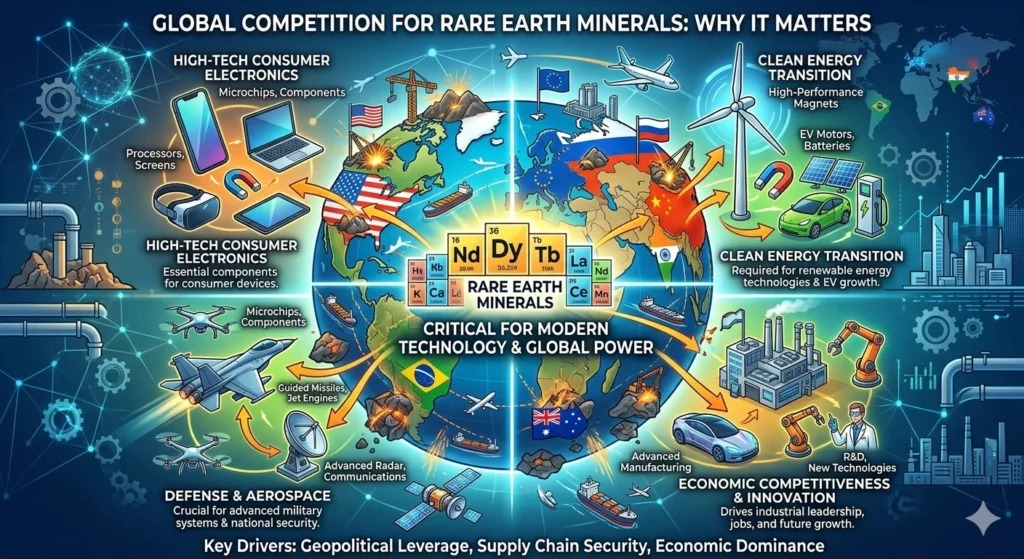
• Rare earth minerals
• Manufacturing
Companies that control important supply chains may gain strategic advantages.
________________________________________
The Five-Signal Market Framework
When markets become nervous, instead of reacting emotionally, examine five areas.
________________________________________
Signal 1: Interest Rates
Ask:
• Are rates rising or falling?
• Are central banks becoming more aggressive?
• Are borrowing conditions tightening?
Interest rates influence almost every financial asset.
________________________________________
Signal 2: Inflation
Ask:
• Are prices accelerating?
• Are inflation pressures temporary or persistent?
• Are consumers changing behavior?
Inflation affects both consumers and policymakers.
________________________________________
Signal 3: Corporate Earnings
Ask:
• Are companies still growing?
• Are profit margins improving?
• Are businesses adapting?
Long-term markets ultimately depend on business performance.
________________________________________
Signal 4: Credit Conditions
Ask:
• Are banks willing to lend?
• Are companies facing financing problems?
• Are defaults increasing?
Credit stress can reveal deeper economic problems.
________________________________________
Signal 5: Investor Psychology
Ask:
• Is everyone becoming excessively optimistic?
• Is fear becoming extreme?
• Are decisions driven by emotion?
Markets are influenced by human behavior as much as financial data.
________________________________________
The Biggest Mistake During Market Fear
The biggest mistake is believing every market decline requires immediate action.
Sometimes doing nothing is a decision.
Sometimes patience is a strategy.
Markets naturally experience:
• Corrections
• Volatility
• Uncertainty
The question is not:
“Did prices fall?”
The question is:
“Why did prices fall?”
Understanding the reason matters more than reacting to the movement.
________________________________________
The Investor Identity Shift
The modern investor needs a different mindset.
Not a trader chasing every headline.
Not a person reacting emotionally to every market movement.
Instead:
A person who understands systems.
Someone who recognizes that:
• Fear creates opportunities.
• Uncertainty creates information.
• Market cycles repeat.
• Strong decisions require patience.
The goal is not to eliminate uncertainty.
The goal is to become comfortable analyzing it.
________________________________________
A Story Every Investor Should Remember
During every major market crisis, two types of people appear.
The first group sees only danger.
They focus on:
• Falling prices
• Negative headlines
• Fearful predictions
The second group asks different questions.
They ask:
• What caused this?
• Is this temporary?
• What opportunities are being created?
• Which assets remain valuable?
The difference is not intelligence.
It is preparation.
________________________________________
Future Pacing: Imagine Understanding the Next Market Shock
Imagine opening financial news tomorrow.
Instead of seeing:
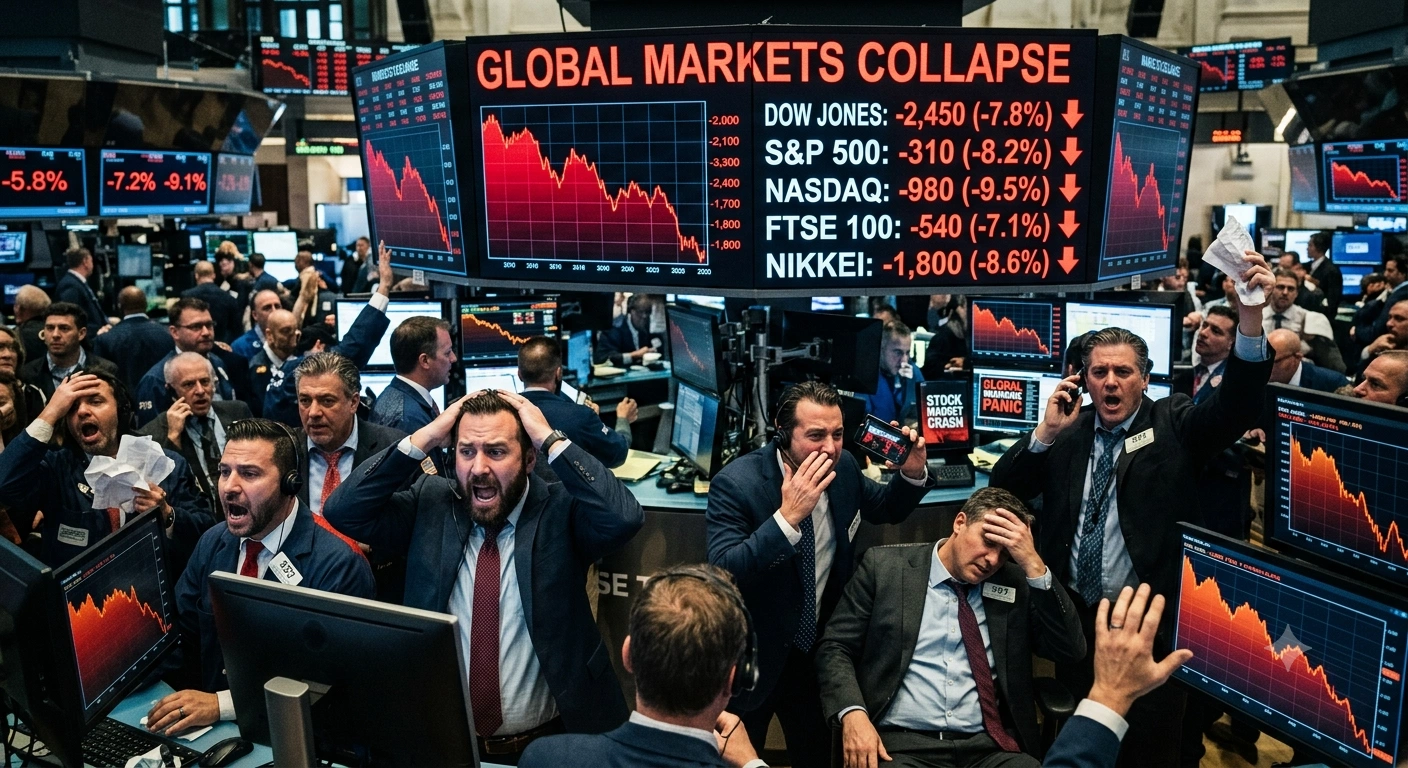
“Markets Collapse Amid Fear”
you see a deeper picture.
You ask:
“What changed?”
You recognize:
• Interest rate pressures
• Currency movements
• Economic expectations
• Investor psychology
• Global trends
You are no longer simply reacting.
You are interpreting.
That does not guarantee perfect decisions.
But it creates something more valuable:
Confidence based on understanding.
________________________________________
Final Conclusion: Why Global Markets Are Nervous Again
Global markets are nervous because the world economy is experiencing multiple transformations at the same time.
Investors are navigating:
• Changing interest rates
• Inflation uncertainty
• AI-driven disruption
• Energy transformation
• Geopolitical competition
• Supply chain restructuring
• Debt concerns
The fear is not caused by one single event.
It comes from a world where the future is becoming harder to predict.
But uncertainty does not only create risk.
It creates opportunity.
Every major economic transformation rewards those who understand change early.
The investors who succeed in the future will not necessarily be those who predict every market movement.
They will be those who understand the forces shaping the world.
Because markets are not simply numbers.
They are a reflection of human decisions, expectations, innovation, fear, and ambition.
And learning to read that story is one of the most valuable financial skills anyone can develop.
________________________________________
Soft Call To Action
The world economy will continue changing.
New technologies will emerge.
New challenges will appear.
New opportunities will be created.
The advantage belongs to people who continue learning, questioning assumptions, and understanding the forces behind the headlines.
Stay informed.
Study the systems.
Think long term.
Because the next major market shift will not begin when everyone notices it.
It will begin quietly—inside the hidden forces most people never see.
OTHER READS:
A youtube video:
A pinterest image:

Linkedin -- www.linkedin.com/in/shishir-bhargava-68a8b4257
- 2026 Lexus IS 350 F Sport: Shocking review - August 22, 2026
- Why Global Markets Can Turn Nervous Overnight | How to prepare for it - July 9, 2026
- Why Countries Are Competing for Rare Earth Minerals | Shocking Details Revealed - July 6, 2026
⚠️ Most People Discover Trends When It's Too Late
Join the Trends Goldmine Insider List and get emerging AI tools, future products, viral keywords, and hidden opportunities before they hit the mainstream.
While everyone else is chasing yesterday's trends, you'll be spotting tomorrow's opportunities first.
🚀 Free Weekly Trend Alerts • No Spam • Unsubscribe Anytime
SIGN UP NOW & RECEIVE A SHORT REPORT ON HOW TO MAKE FORTUNE WITH TRENDS.Trusted by readers who want to discover opportunities before the crowd.